Kids' Dental Sealants: Do They Really Prevent Cavities
If your child's dentist has recommended sealants, it's fair to wonder whether the treatment is worth it or just an upsell. At Sawgrass Dental Center in Sunrise, we recommend dental sealants often enough that it's worth walking through what the research actually says, how the treatment works, and when it makes sense for your child.
What Are Dental Sealants?
A dental sealant is a thin, plastic coating painted onto the chewing surfaces of the back teeth, most commonly the molars and premolars. It forms a protective barrier over the grooves and pits where food particles and bacteria tend to collect, areas that are genuinely difficult to keep clean with a toothbrush alone. Once applied, the sealant hardens quickly and creates a smooth, easier-to-clean surface.
Do Dental Sealants Actually Prevent Cavities?
According to the Centers for Disease Control and Prevention, sealants applied soon after the adult molars come in can prevent up to 80% of cavities for two years and continue protecting against 50% of cavities for up to four years. The CDC also reports that children aged 6 to 11 without sealants are almost three times more likely to develop cavities in their molars than children who have them. That's a meaningful difference, not a marginal one, and it's the main reason sealants are considered a standard preventive treatment rather than an optional extra.
The effect is strongest when sealants are placed at the right time: around age 6, when the first permanent molars erupt, and again around age 12, when the second molars come in. Sealing a tooth before decay has a chance to start is far more effective than trying to catch a cavity after it forms.
What to Expect During a Dental Sealant Application
| Step | What Happens |
|---|---|
| Cleaning | The tooth is cleaned so no debris interferes with bonding |
| Drying | The tooth surface is dried completely, since moisture affects bonding |
| Etching | A mild solution roughens the surface so the sealant adheres well |
| Application | The liquid resin is painted into the grooves of the tooth |
| Curing | A special light hardens the sealant into a protective layer |
The entire process typically takes just a few minutes per tooth and doesn't require any numbing or drilling. Most children tolerate it easily, and there's no recovery time. Once the sealant has cured, your child can eat and drink normally right away.
Who Should Get Dental Sealants?
Sealants are most strongly recommended for children and teenagers as their permanent molars come in, but they aren't limited to kids. A few groups tend to benefit the most:
- Children and teens getting their first or second set of permanent molars
- Anyone with deep grooves or pits where a toothbrush bristle can't easily reach
- Kids or adults with a history of cavities in the back teeth
- Patients wearing braces or other orthodontic appliances that make cleaning harder
Adults with healthy, cavity-free molars can also benefit from sealants, though the treatment is most commonly discussed as part of pediatric dental care, since that's when it has the biggest long-term payoff.
How Long Do Sealants Last?
When applied and maintained properly, sealants can protect a tooth for up to 10 years, though your dentist will check them at routine cleanings to make sure they're still intact. A sealant can wear down or chip over time, particularly on a tooth that does a lot of chewing, so periodic checks matter more than assuming the protection lasts forever without any follow-up.
Are Sealants Worth the Cost?
Sealants are also one of the more cost-effective preventive treatments available. The CDC notes that each sealed tooth can save more than $11 in future dental treatment costs, since preventing a cavity is almost always less expensive than treating one with a filling, and far less expensive than a crown or root canal down the road. Combined with routine preventive dentistry, sealants are a small upfront step that can meaningfully reduce your child's chances of needing more involved treatment later.
Do Sealants Replace Brushing and Flossing?
No. Sealants protect the chewing surfaces of the back teeth, but they don't cover the sides of teeth or the spaces between them, where cavities can also form. Brushing twice a day, flossing daily, and keeping up with regular checkups are still necessary. Sealants are best understood as an additional layer of protection in the areas that are hardest to clean, not a substitute for a good home routine.
Conclusion
The research is fairly clear: dental sealants are a safe, painless, and effective way to reduce a child's risk of cavities in the back teeth, especially when applied around the time permanent molars come in. They aren't a replacement for brushing, flossing, and regular checkups, but they add real protection in the grooves that are hardest to keep clean on their own. If your child hasn't had sealants yet, our Sunrise team can take a look and let you know whether they'd help, just reach out to schedule a visit.
Frequently Asked Questions
At what age should kids get dental sealants?
Sealants are usually recommended around age 6, when the first permanent molars come in, and again around age 12, when the second molars erupt.
Do dental sealants hurt?
No. The application process doesn't require drilling or anesthesia and is generally painless for children.
How long do dental sealants last?
With proper care, sealants can protect a tooth for up to 10 years, though your dentist will check them at regular visits to confirm they're still intact.
Can adults get dental sealants too?
Yes. While sealants are most commonly applied to children's permanent molars, adults with healthy, cavity-free molars can benefit as well.
Do sealants mean my child doesn't need to brush as carefully?
No. Sealants only protect the chewing surfaces of certain teeth, so regular brushing, flossing, and checkups are still essential.
About the Author
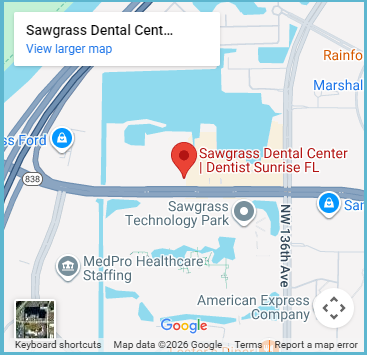
Sawgrass Dental Center is located at 14201 W. Sunrise Blvd Suite 204, Sunrise, FL 33323. The practice is led by Dr. Dianna Wohlstein, DMD, who provides general, cosmetic, and preventive dental care for patients of all ages in Sunrise and the surrounding South Florida communities.
Disclaimer
The information provided in this article is for educational purposes only and does not constitute professional dental advice, diagnosis, or treatment recommendations. Whether dental sealants are appropriate for your child can only be determined through an in-person evaluation. Always seek the advice of a qualified dentist with any questions regarding your child's oral health.
Blog Post Author

Contributed by DentalROI
DentalROI provides relevant dental content to help providers educate patients. The statements, services, and products referenced in this article have not been evaluated by the Food and Drug Administration, and they are not intended as a substitute for professional medical advice, diagnosis, or treatment. Always seek the advice of your dental provider with any questions or issues you may have. Specific recommendations may vary in different circumstances, so individual consultation is important.